Stadium Complex
A 35,000-seat stadium with parametric roof. Dynamic shading, natural ventilation.
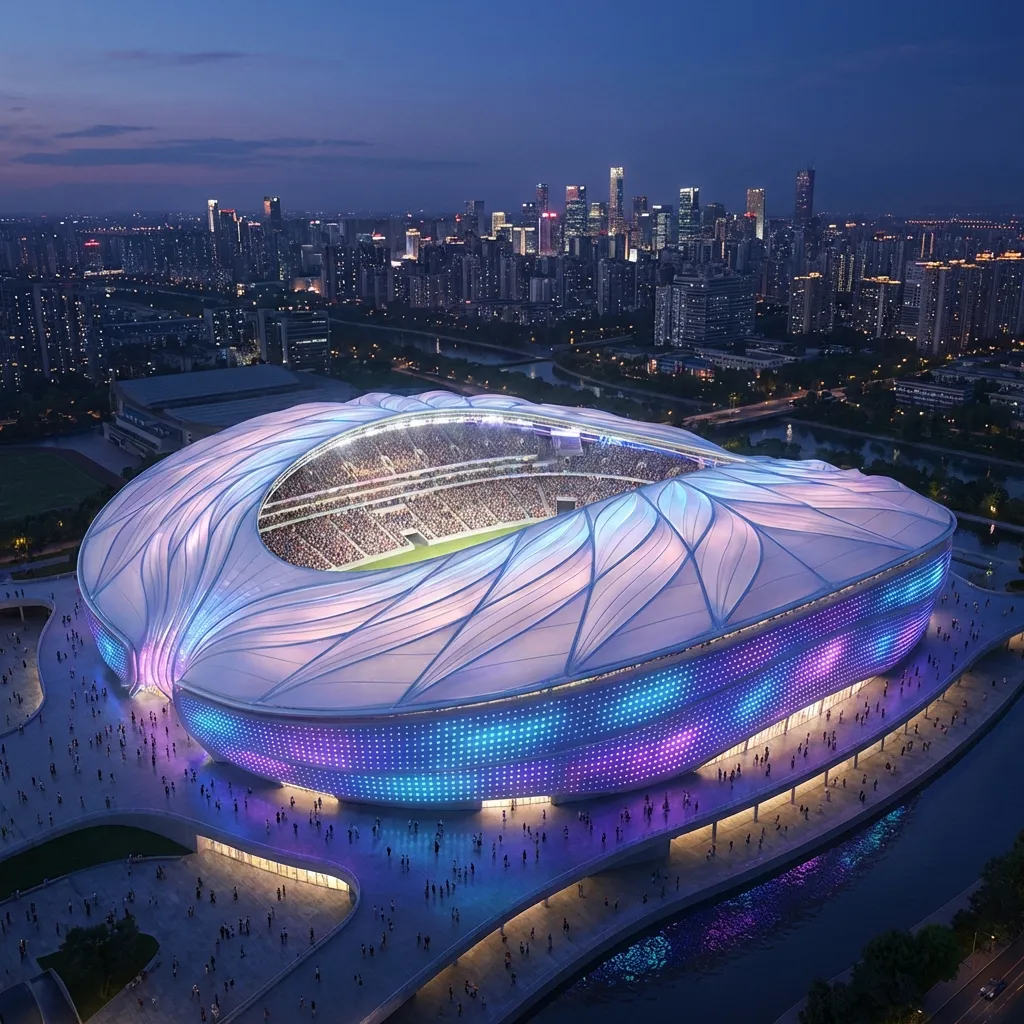
Mediterranean stadiums face a paradox: spectators need shade from intense sun, but the pitch needs maximum daylight for grass growth.
Our parametric roof system solves both: ETFE panels rotate based on sun position, shading seats while allowing 85% PAR transmission to the playing field.
Design 35,000-seat stadium for Mediterranean climate with dynamic sun shading and FIFA-compliant pitch conditions.
Design Intent
A stadium is not a building. It is a microclimate machine. 35,000 people, Mediterranean sun, grass that needs light: the roof must negotiate between contradictory needs with precision, not compromise.
Research-Driven Design
CFD-Driven Shell
218 wind tunnel simulations with Butterfly (OpenFOAM wrapper) tested roof curvatures, oculus diameters (22m-32m range), and peripheral opening configurations. The final geometry achieves an average air velocity of 4.2 m/s across the bowl: sufficient for perceived cooling.
Agent-Based Massing
Applying our Emergent Complexes methodology, 2,400 building-agents negotiated positions for the main bowl, 6 service pavilions, and 4 pedestrian plazas. A Physarum algorithm generated primary circulation routes between metro stations and entry gates.
Crowd Evacuation Modeling
PedSim verified that all 40,000 spectators can evacuate within 15 minutes post-match. We tested 12 emergency scenarios; bottlenecks at Gates 3 and 7 were resolved by widening from 8m to 12m.
Moment-Optimized Structure
Roof truss depth varies from 1.8m to 4.2m, following the structural moment diagram. Steel tonnage reduced from 8,200t (uniform depth) to 6,560t (optimized): a 20% material saving without compromising safety factors.
Design Process
Environmental Modeling
3 months218 wind tunnel simulations testing roof curvatures, oculus diameters (22-32m range), and peripheral openings for bowl ventilation.
Agent-Based Layout
6 weeks2,400 building-agents negotiated positions for bowl, 6 pavilions, and 4 plazas. Physarum algorithm generated circulation routes.
Safety Validation
8 weeksPedSim crowd evacuation modeling: 12 emergency scenarios tested. Gates 3 and 7 widened from 8m to 12m to resolve bottlenecks.
Structural Optimization
4 monthsMoment-diagram-following truss depth variation (1.8m to 4.2m) achieved 20% steel reduction without compromising safety factors.
Technical Data
Material Palette
ETFE Cushions
Dynamic pneumatic ETFE panels that rotate based on real-time sun position. Transparent when pitch needs light, opaque when spectators need shade.
Variable-Depth Steel Truss
Roof truss depth follows structural moment diagram: 1.8m at supports, 4.2m at peak moment zones. Saves 1,640 tonnes of steel.
Precast Concrete Bowl
Standardized precast terrace units for rapid assembly. Integrated channel drainage beneath seating tiers.
Porous Ground Paving
Permeable paving across all pedestrian areas manages stormwater on-site, feeding landscape irrigation systems.
Performance Metrics
Environmental Performance
Before & After Our Analysis
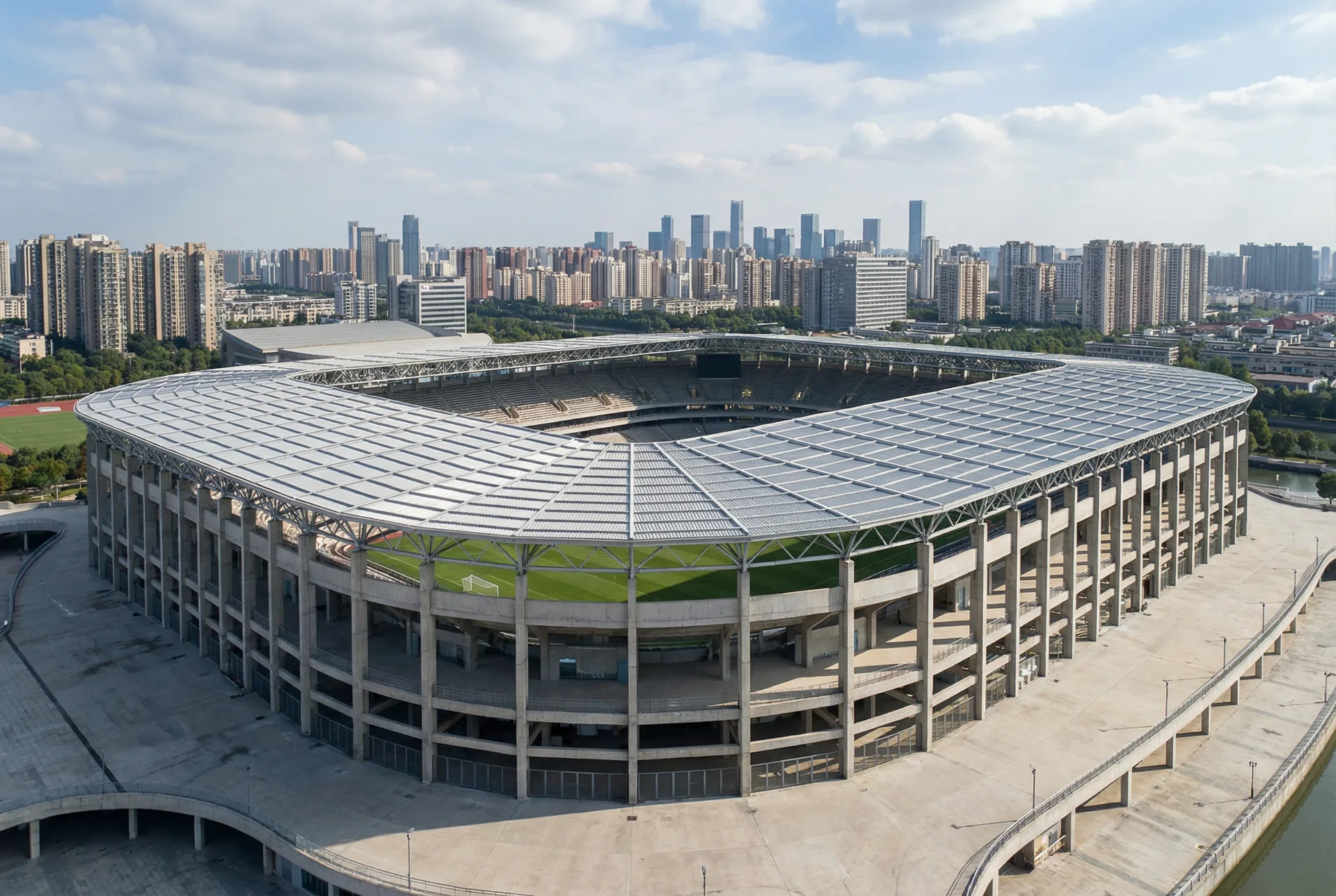
Open-air stadium without shading
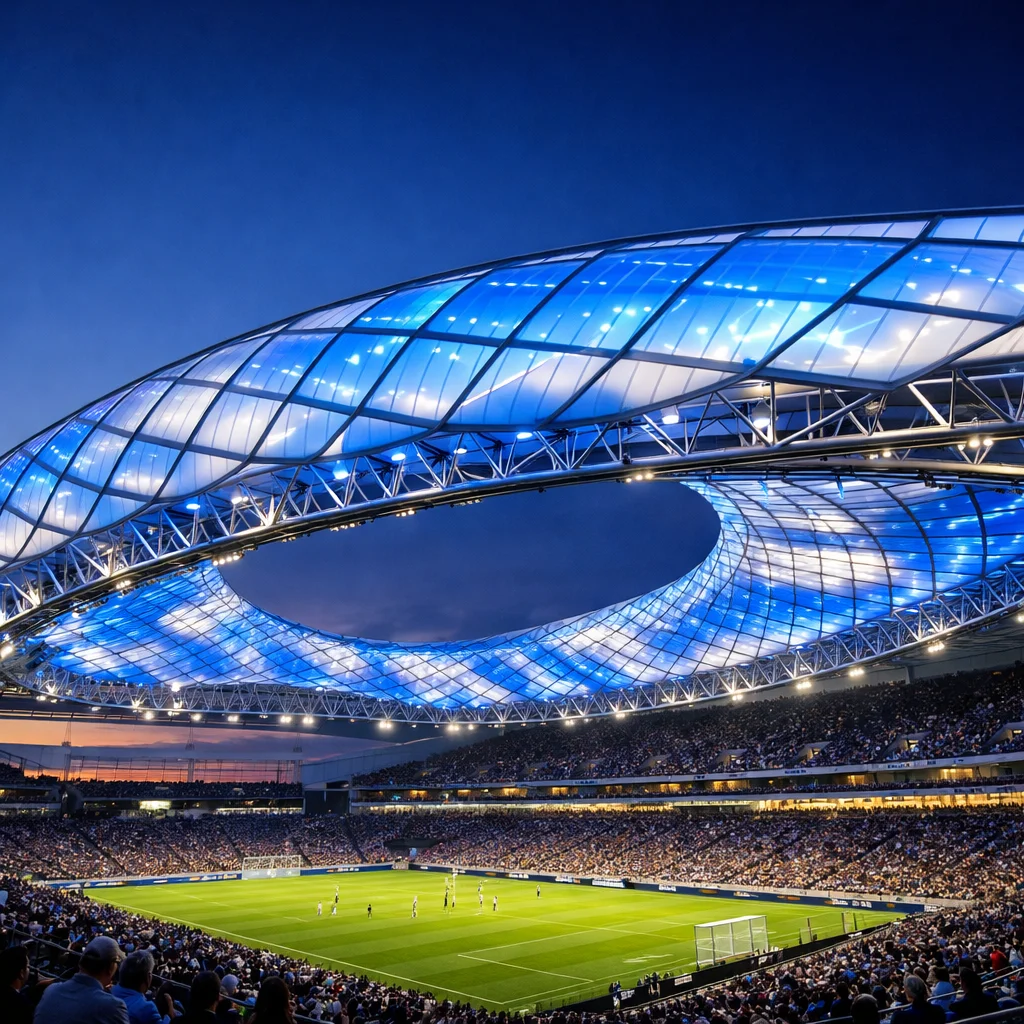
Dynamic ETFE parametric roof
The parametric roof solves the Mediterranean stadium paradox: 95% seat shading during summer matches while maintaining 85% PAR transmission for natural grass growth. Temperature reduced 6 degrees versus open design.
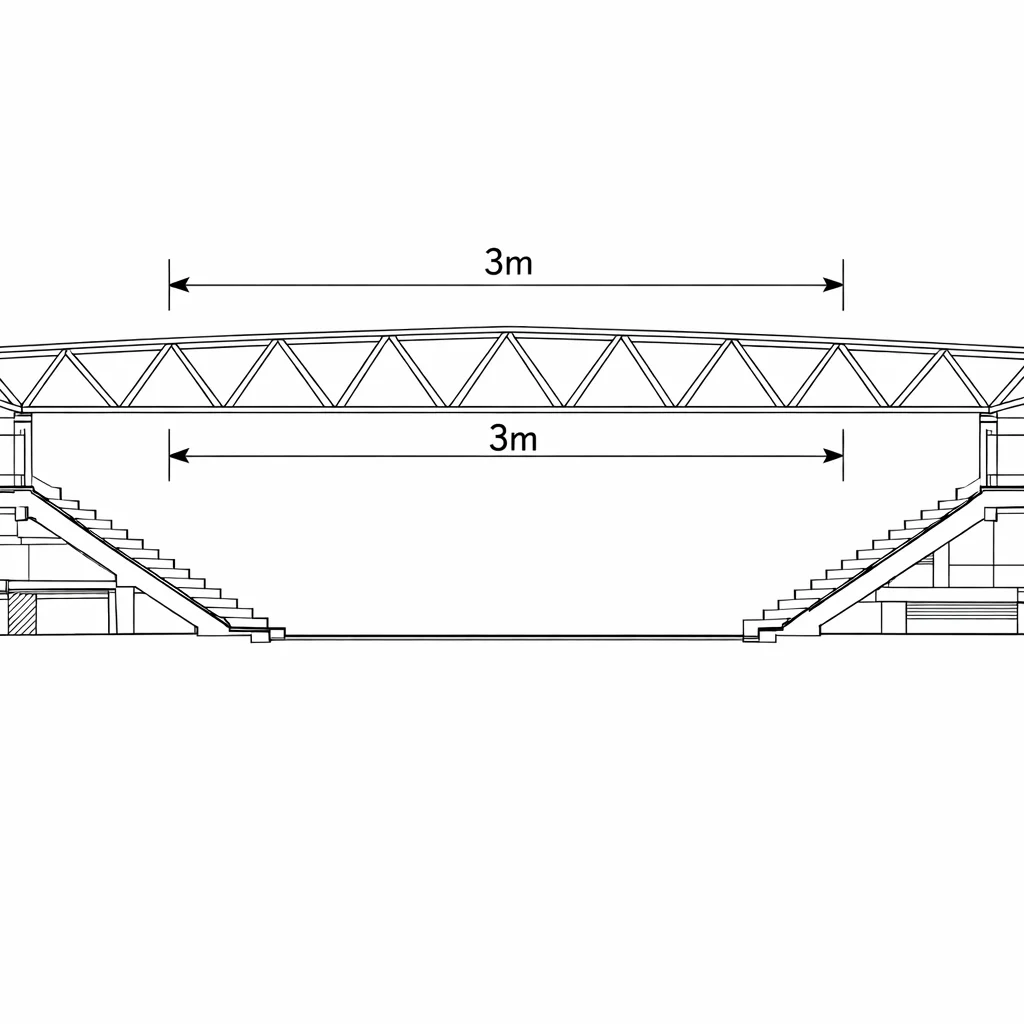
Uniform-depth roof structure
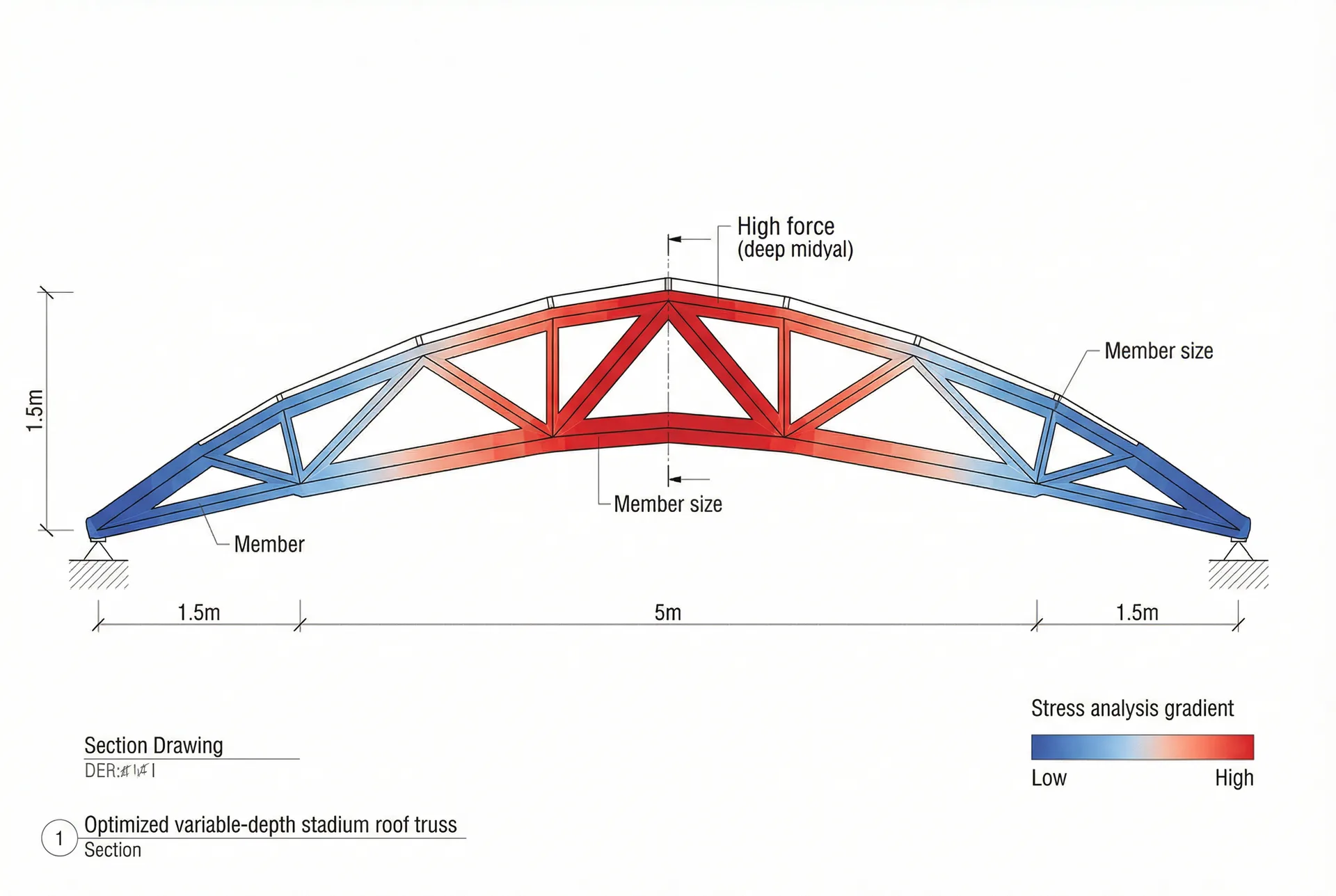
Moment-optimized variable truss
Truss depth follows the structural moment diagram, varying from 1.8m at supports to 4.2m at peak zones. This saves 1,640 tonnes of steel: a 20% reduction without compromising safety factors.
Dynamic ETFE system adds 15% to roof cost. Justified by reduced HVAC and maintenance.
The parametric roof solved a problem no previous design team could address: shade for spectators without starving the grass of sunlight. The engineering is remarkable.
Click to enlarge
From Research to Product
Antalya, Turkey
Sports Ministry
- Fraktal
- MEP: Arup
Interested in sports design?
We bring algorithmic optimization to projects at every scale. Let’s discuss your next challenge.