Coastal Villas
12 units nested into a 45° slope. 40% less excavation, 100% sea views.
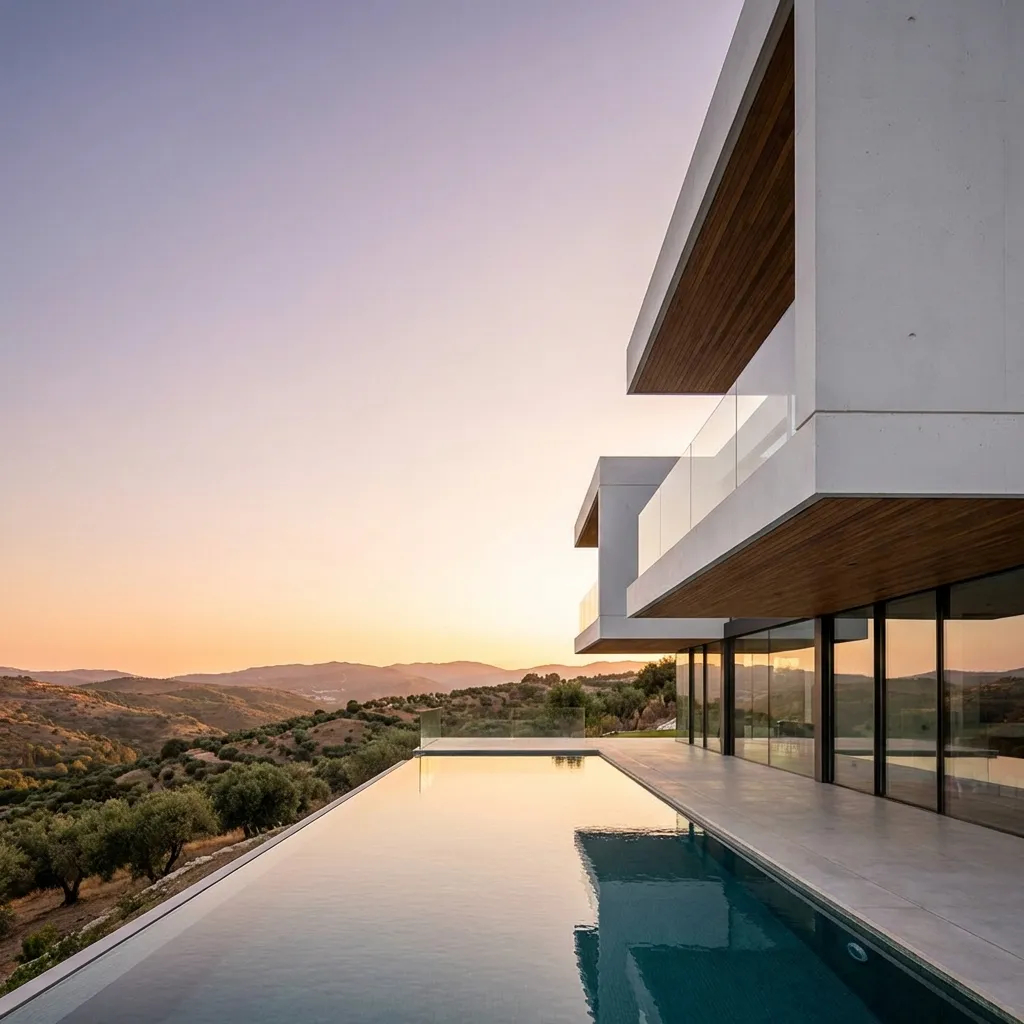
The Turkish coast is littered with terraced villa projects that treat topography as an obstacle to be bulldozed. This project takes the opposite position: the 45° slope is not a problem to solve but a design driver.
Using evolutionary optimization (Galapagos), we tested 1,400 massing configurations to find positions where 12 villa units nest into the hillside with minimal excavation. The result: 40% less cut-and-fill volume than the developer's original terracing scheme, while achieving 100% unblocked sea views for every living room.
Design 12 high-end villas on a 45° slope without terracing, while guaranteeing uninterrupted sea views for all units and meeting Turkey's 6.5m coastal height limit.
Design Intent
The slope is not an obstacle. It is the architect. Every contour line carries information about where to build, where to rest, and where to let the landscape breathe.
Research-Driven Design
Topographic Nesting
We discretized the site into a 0.5m grid (14,000 points) and optimized unit placement for minimal cut volume. Best result: Units 1-4 at 12-18m elevation (south terrace); Units 5-8 at 22-28m (mid-slope); Units 9-12 at 34-40m (ridge). Total excavation: 4,200m³ vs. 7,000m³ for conventional terracing.
Isovist View Optimization
For each of 1,400 configurations, we computed the sea-facing isovist cone from the living room. Constraint: ≥140° unobstructed view angle. Final unit rotations range from 12° (Unit 7) to 38° (Unit 3) off the contour tangent.
Solar Carving
Building envelopes were 'carved' using Dec 21 sun vectors so all south-facing rooms receive ≥4 hours of winter sun. The same geometry self-shades in summer (Jun 21) when the sun is at 72° above horizon.
Cross-Ventilation Testing
CFD analysis confirmed that the staggered layout creates pressure differentials enabling cross-ventilation without mechanical systems. Average air changes = 8.2/hour with windows open, exceeding ASHRAE 62.1 requirements.
Design Process
Site Analysis
3 months14,000-point terrain digitization, microclimate recording over 6 months, geological survey.
Optimization
6 weeks1,400 massing iterations in Galapagos testing excavation volume, view angles, and solar access simultaneously.
Design Development
4 monthsEnvelope carving with Dec/Jun sun vectors, CFD cross-ventilation validation, material specification.
Documentation
2 monthsConstruction documents with cableway logistics plan, phased excavation sequencing.
Technical Data
Material Palette
Exposed Concrete
Board-formed locally sourced aggregate concrete for retaining walls, finished to match hillside tonality.
Larch Timber Cladding
Untreated Turkish larch that silvers over 3-5 years, reducing maintenance and blending with coastal vegetation.
Low-E Triple Glazing
Floor-to-ceiling panels maximizing sea views while limiting solar heat gain to meet A+ energy targets.
Green Roof Substrate
Native coastal plantings on low-slope roofs reduce stormwater runoff and restore displaced habitat area.
Performance Metrics
Environmental Performance
Before & After Our Analysis
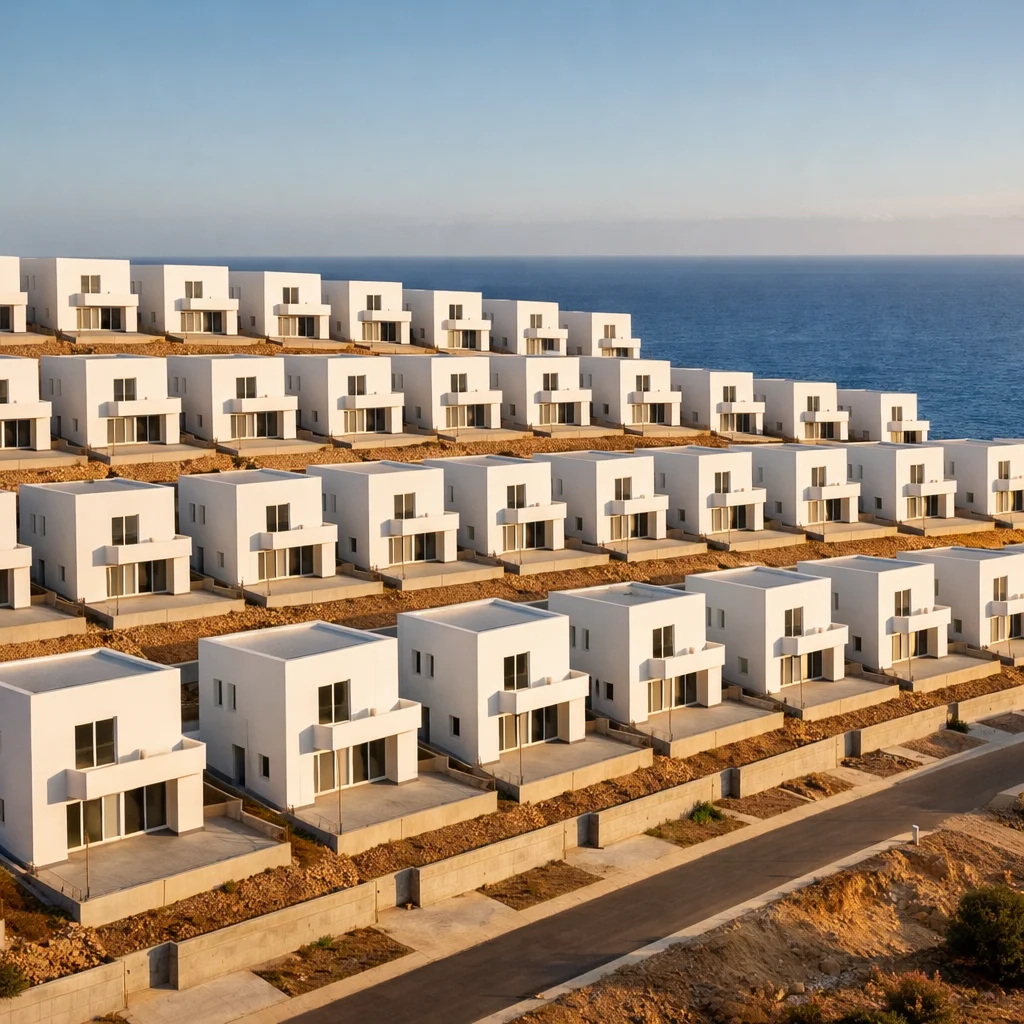
Conventional terracing approach
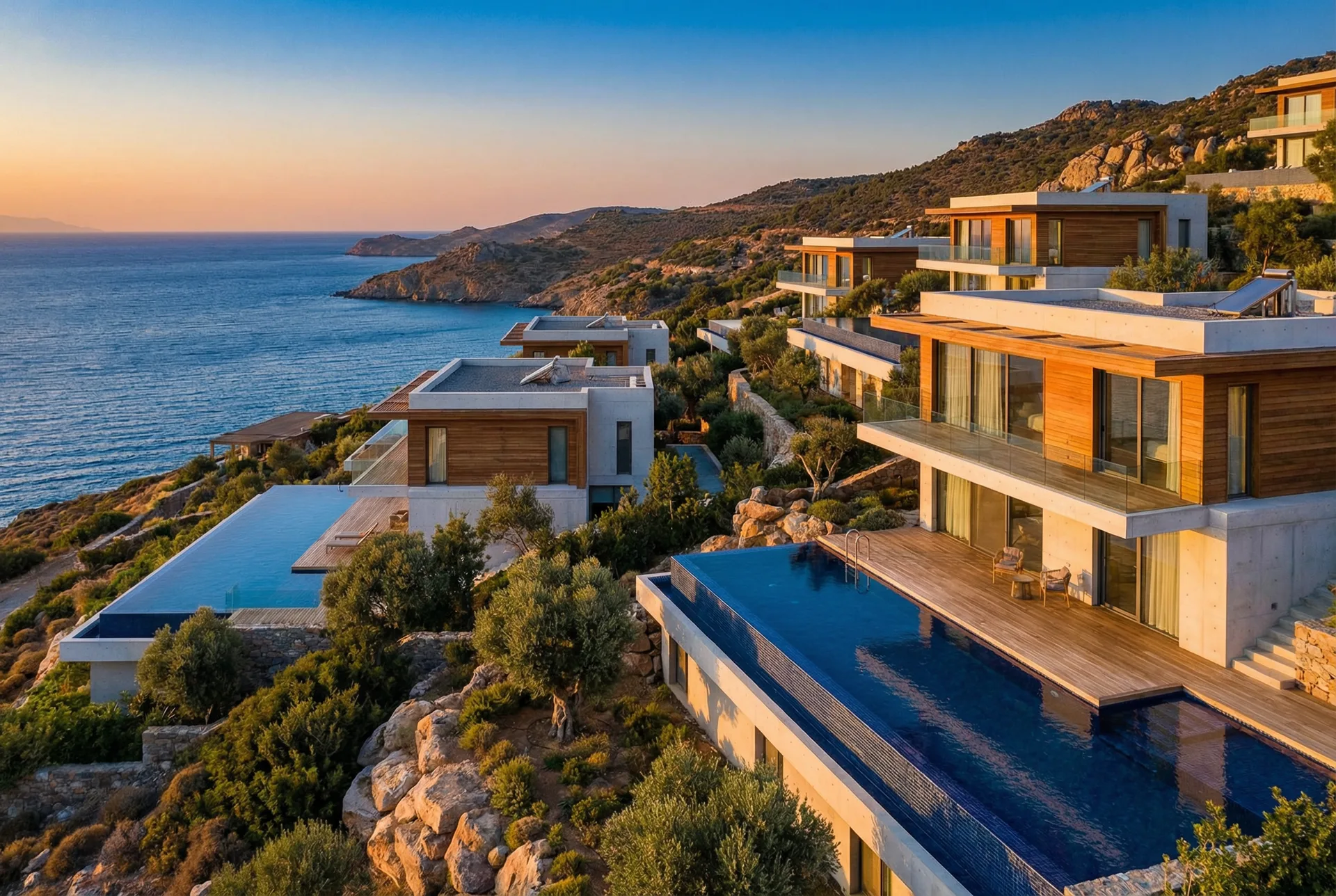
Topographic nesting optimization
Evolutionary optimization tested 1,400 massing configurations. The final layout nests 12 villas into the hillside with 40% less excavation than conventional terracing, while guaranteeing 100% unblocked sea views.
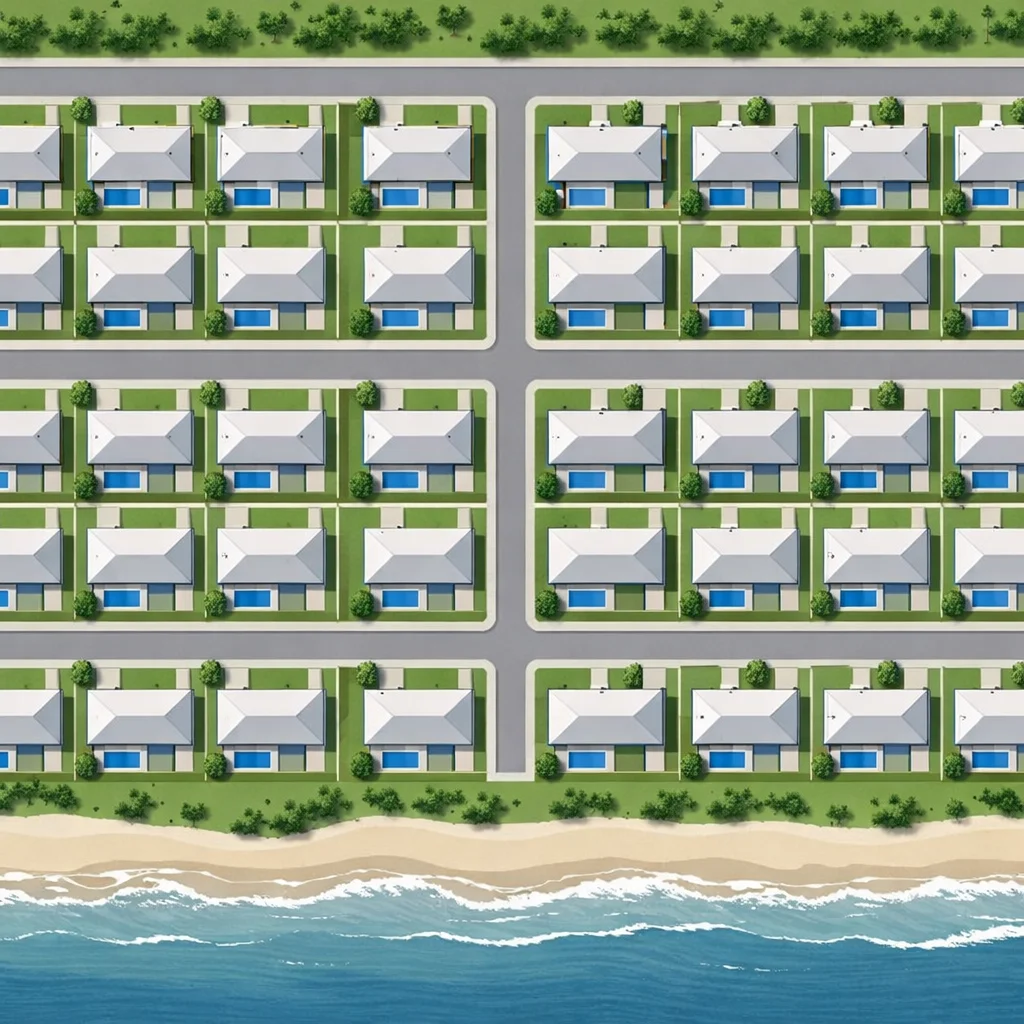
Standard villa orientation
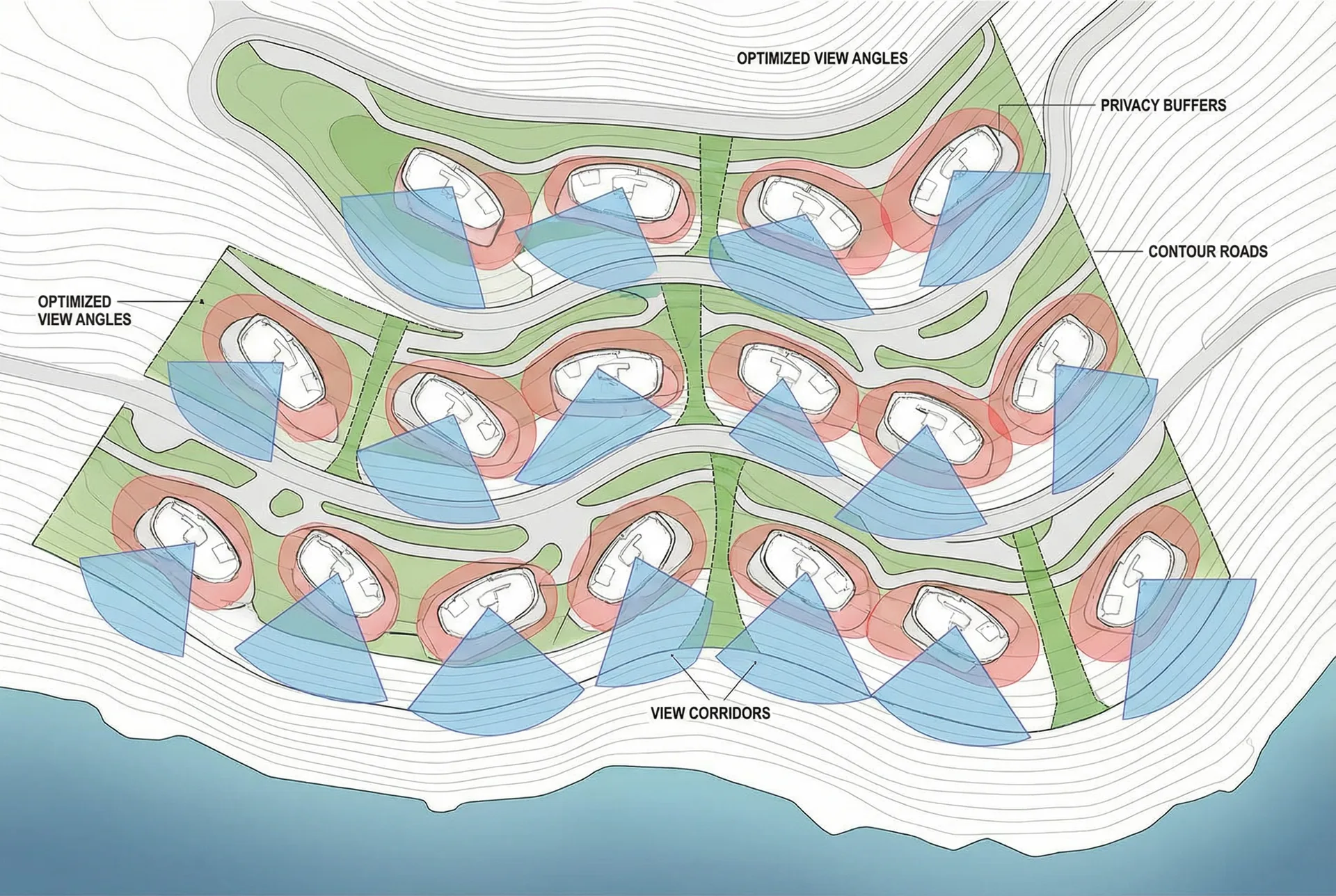
Isovist-optimized rotation
Each unit was rotated between 12 and 38 degrees off the contour tangent to achieve a minimum 140-degree unobstructed sea view cone from every living room.
The staggered layout complicates construction logistics. We specified a temporary cableway system for material delivery.
We came with a terracing plan. Fraktal showed us a way to build more, disturb less, and give every owner the view they paid for. The numbers were convincing.
Click to enlarge
From Research to Product
Bodrum Peninsula, Turkey
Private Developer
- Fraktal
- Landscape: Scape Design
Interested in residential design?
We bring algorithmic optimization to projects at every scale. Let’s discuss your next challenge.