Micro-Living Units
28m² apartments that feel like 45m². Spatial illusions through parametric furniture.
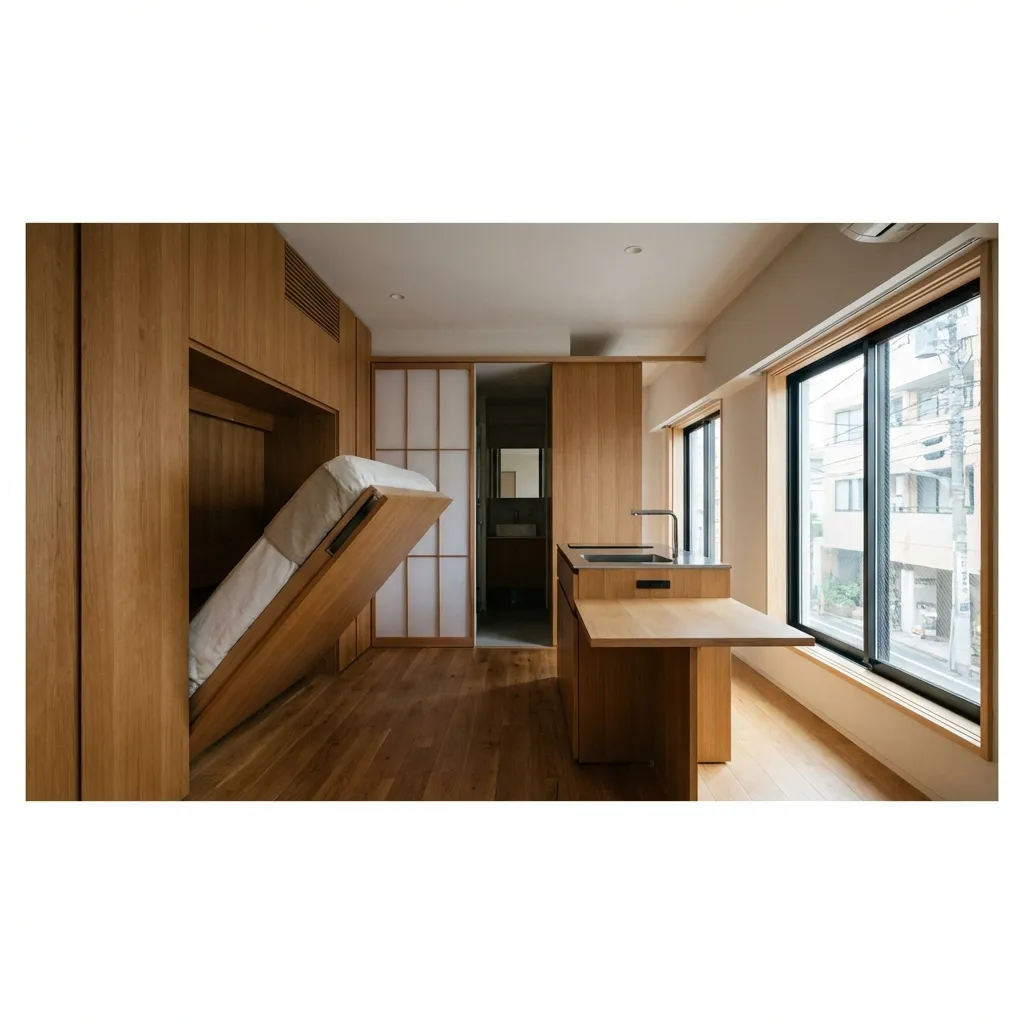
Urban housing in Turkey increasingly means smaller units. Instead of fighting this trend, we embraced it: designing 28m² apartments that psychologically feel much larger.
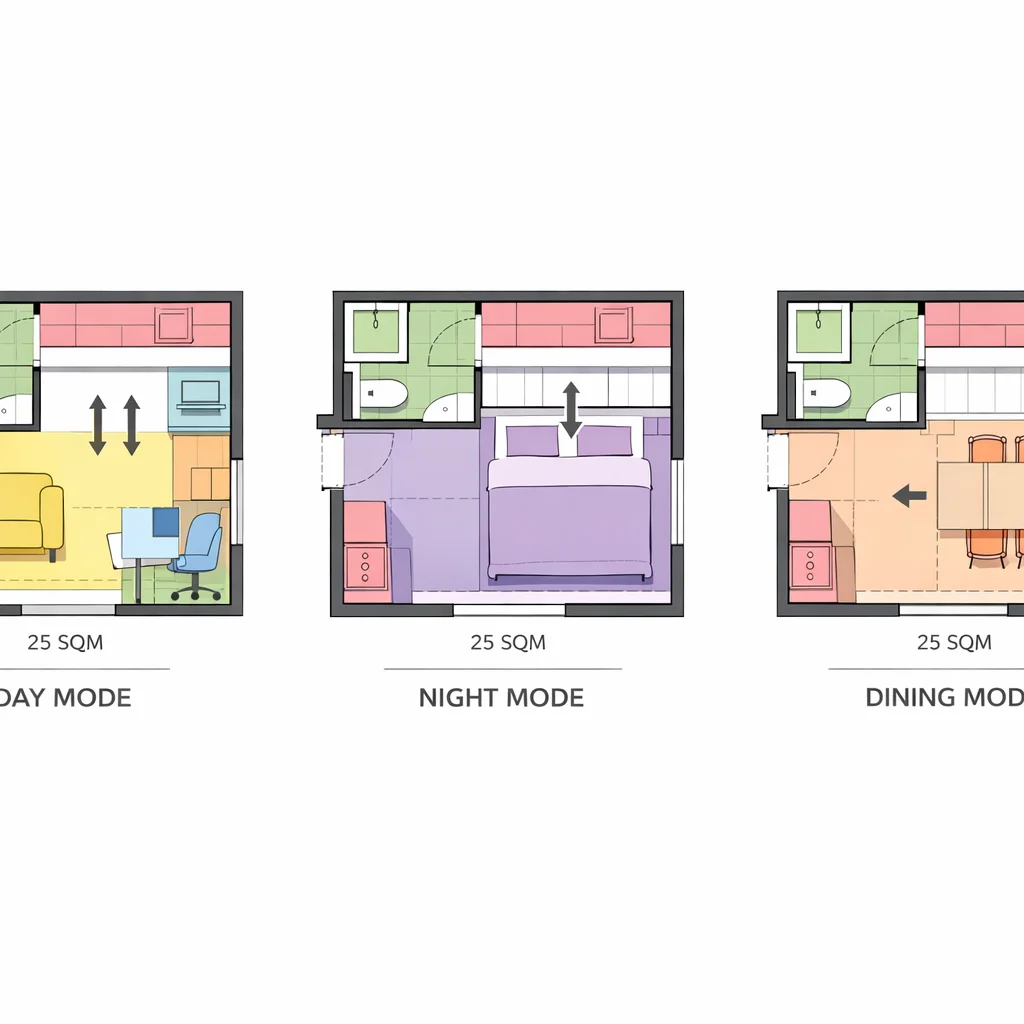
The key: parametric furniture systems that transform throughout the day. A bed becomes a sofa, a desk folds into a dining table, storage is hidden in every surface.
Make 28m² apartments feel spacious enough for young professionals, while including full kitchen, bathroom, sleeping, working, and living functions.
Design Intent
Space is not measured in square meters. It is measured in possibilities. A 28m² apartment that offers 12 configurations is larger than a 60m² apartment with one.
Research-Driven Design
Activity Mapping
Using SpaceCraft, we collected 72 hours of movement data across 12 existing micro-apartments. Heatmaps revealed that 60% of waking hours were spent in a 4m² zone: this 'active core' became our primary design driver.
Cultural Genome Mixing
From Tokyo: the genkan threshold (psychological decompression at entry). From Copenhagen: the 'window seat' as a separate activity zone. From Berlin: the Arbeitszimmer as a closeable visual boundary. These were synthesized into a hybrid typology.
Proxemic Calibration
We applied Edward Hall's proxemic theory: intimate zone (0-45cm) assigned to the bed alcove; personal zone (45-120cm) for desk and seating; social zone (1.2-3.6m) for dining and hosting. Furniture placement was optimized against these thresholds.
Perception Over Addition
Strategic mirror placement (2.4m² total) and indirect ambient lighting expanded perceived volume by 40% in user surveys. We maintained ceiling height variation (2.4m → 2.7m at window edge) to avoid the 'capsule hotel' aesthetic.
Design Process
Behavioral Research
6 weeks72 hours of movement tracking across 12 existing micro-apartments. Identified the 4m² active core where 60% of waking hours are spent.
Cultural Analysis
4 weeksSpatial genome extraction from Tokyo (genkan threshold), Copenhagen (window seat), and Berlin (Arbeitszimmer) micro-living typologies.
Proxemic Design
8 weeksFurniture placement optimized against Edward Hall's proxemic zones: intimate (0-45cm), personal (45-120cm), social (1.2-3.6m).
Prototype + Build
5 monthsFull-scale mock-up tested with 8 users over 2 weeks. Perception surveys validated 60% size increase. 4 pilot units built.
Technical Data
Material Palette
Birch Plywood
CNC-cut furniture modules from Finnish birch plywood. 18mm thickness balances structural capacity with visual lightness.
Micro-Cement Flooring
Seamless 3mm micro-cement floor eliminates visual boundaries between zones, expanding perceived area.
Acoustic Felt Panels
Recycled PET felt in ceiling alcoves absorbs reverberation, preventing the 'echo box' effect common in compact units.
Integrated LED Strips
Indirect ambient lighting system concealed in furniture joinery. Tunable 2700K-5000K for activity-appropriate atmosphere.
Performance Metrics
Environmental Performance
Before & After Our Analysis
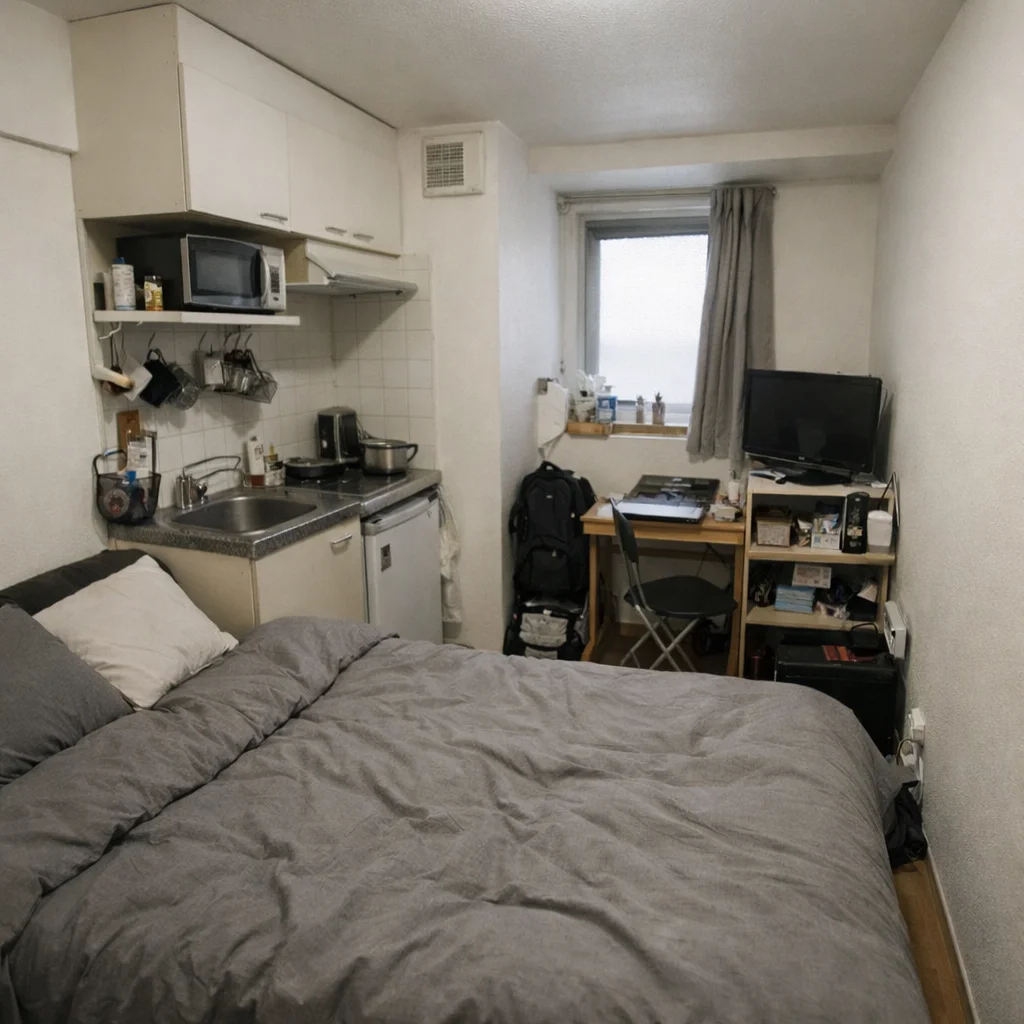
Standard 28m² layout
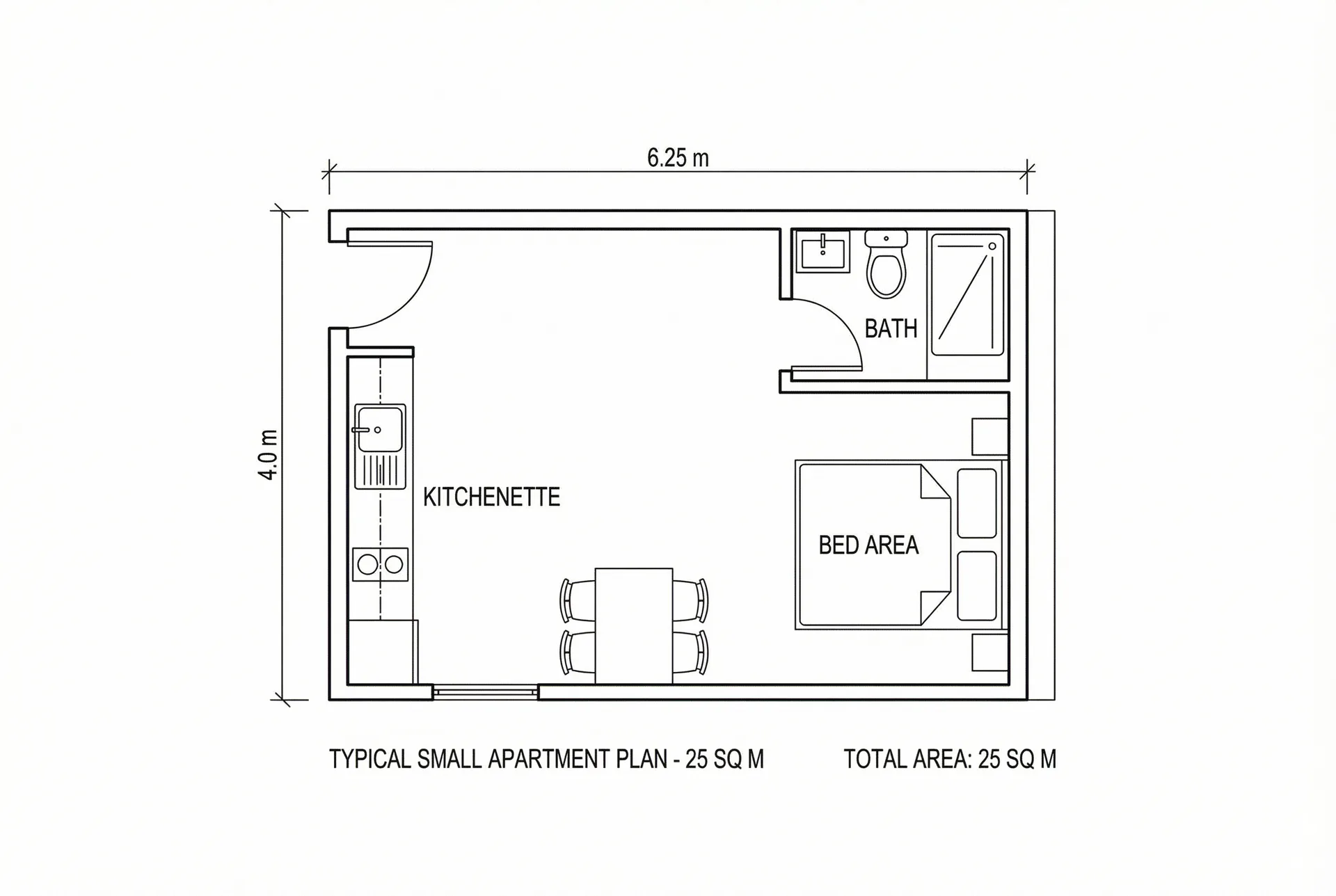
Proxemic-optimized layout
Activity mapping revealed 60% of waking hours in a 4m² zone. Proxemic calibration placed furniture along intimate, personal, and social thresholds, creating 12 transformation modes from a single floor plan.
Conventional compact interior
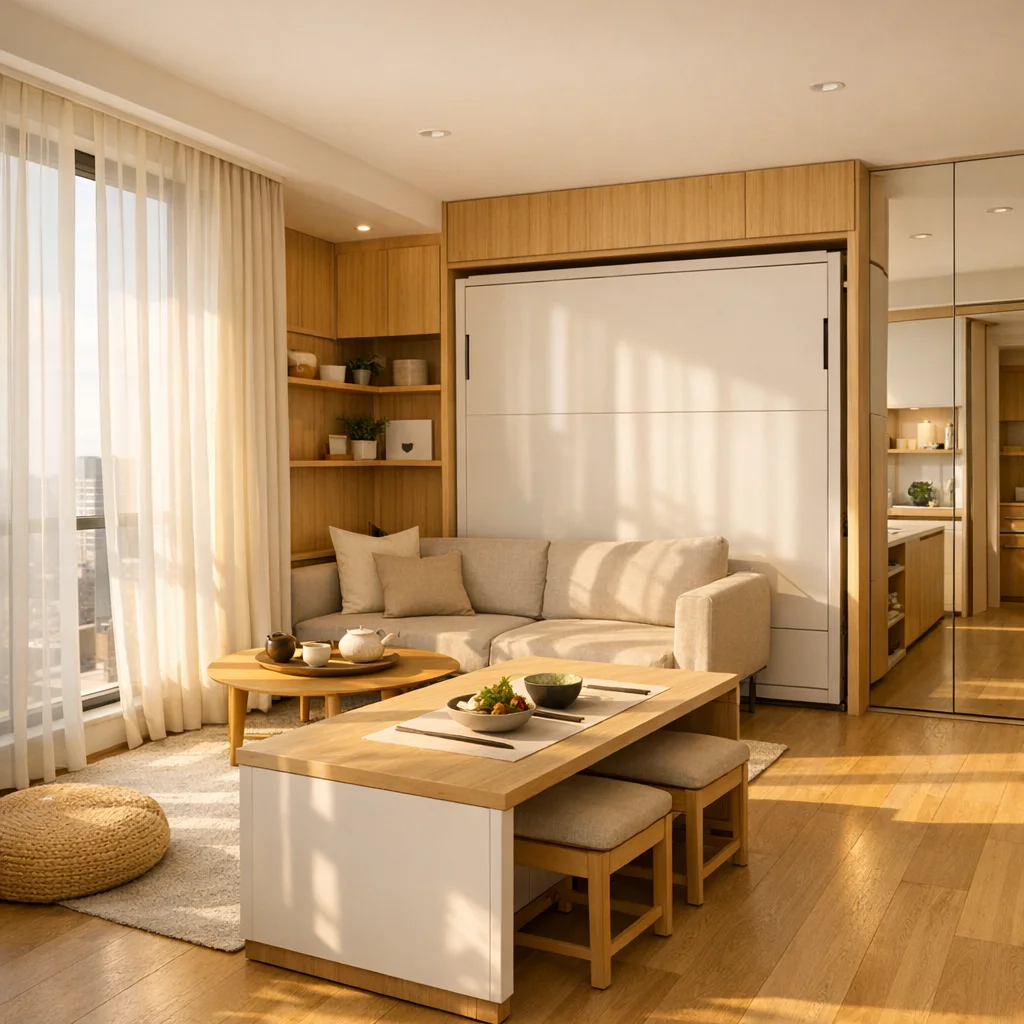
Perception-expanded interior
Strategic mirror placement and indirect lighting expanded perceived volume by 60% in user surveys. Variable ceiling height (2.4m to 2.7m at window) avoids the capsule hotel aesthetic.
Custom furniture costs 40% more than standard. Offset by 20% rental premium.
I was skeptical about 28 square meters. After living here for 6 months, I realized I use every centimeter. My previous 55m² apartment had rooms I never entered.
Click to enlarge
From Research to Product
Ankara, Turkey
Real Estate Developer
- Fraktal
- Furniture: Custom fabrication
Interested in interior design?
We bring algorithmic optimization to projects at every scale. Let’s discuss your next challenge.