Topology-Optimized Bridge
A pedestrian bridge shaped by force flow. 50% less material, higher structural clarity.
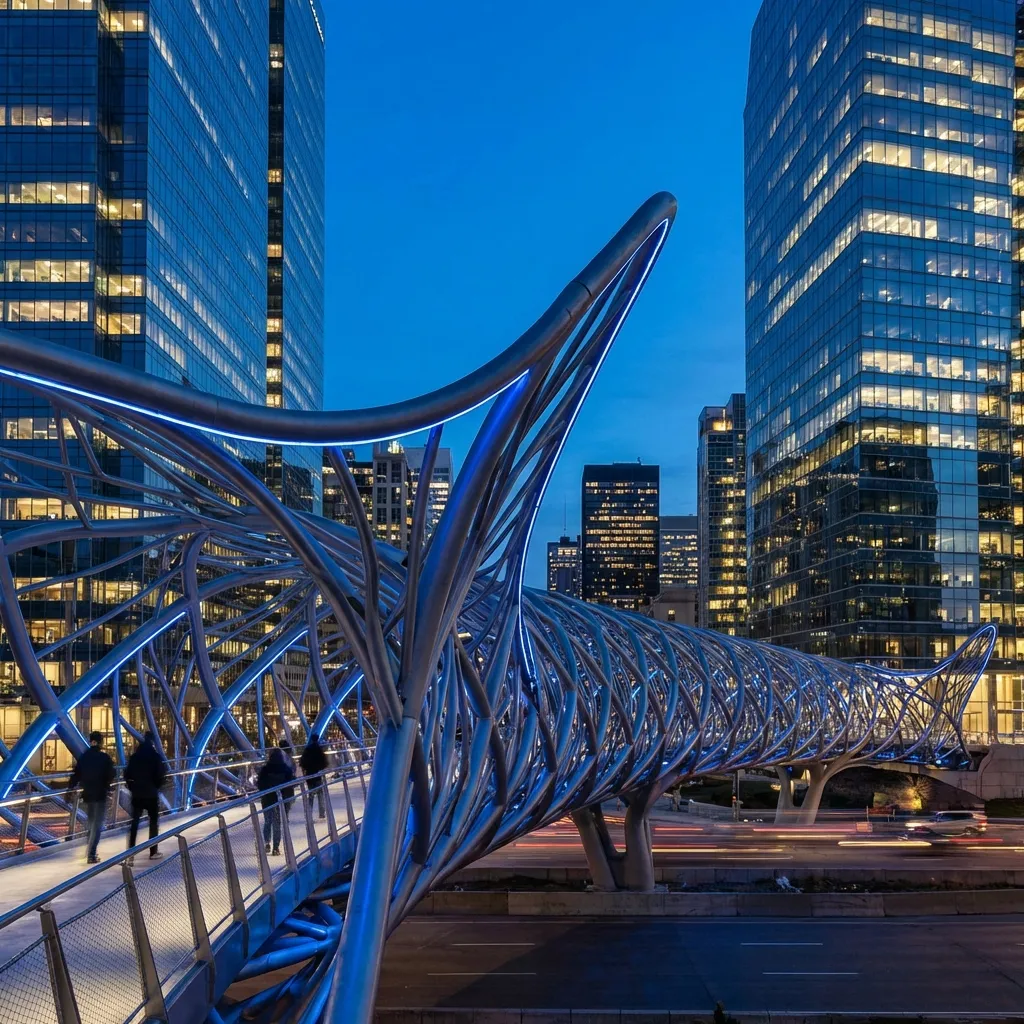
Traditional bridge design applies uniform structural logic across the span. This pedestrian bridge uses topology optimization to place material only where forces flow.
The result: an organic form that uses 50% less steel than a conventional truss, while creating a unique landmark for the city.
Design a 45m pedestrian bridge that becomes an urban landmark while minimizing material use and construction complexity.
Design Intent
Structure is not something you add to architecture. It is architecture. When topology optimization places material only where forces flow, the result is honest, efficient, and inevitably beautiful.
Research-Driven Design
Topology Optimization
We decomposed the design volume into 2.4 million voxels, defined load cases (dead, live, wind, seismic), and ran 1,247 iterations in Millipede. The algorithm removed 68% of the initial volume while keeping stress limits below 240 MPa.
Real-Time FEA Validation
Each optimization iteration was validated in Karamba3D. We rejected geometries with nodal displacements exceeding L/500 (24mm at mid-span). The final form has a maximum displacement of 18mm under full load.
WAAM Node Fabrication
48 primary structural nodes were too complex for conventional fabrication. We specified WAAM (Wire-Arc Additive Manufacturing) in 316L stainless steel. Each node prints in 12-18 hours, then CNC-machined for connection faces. The prototype node tested to 1.8× design load before failure.
Deck Integration
The 4.2m-wide deck uses cross-laminated timber (CLT) panels spanning between structural ribs, reducing dead load by 60% compared to a concrete deck.
Design Process
Load Definition
3 weeksDead, live, wind, and seismic load cases defined. Design volume decomposed into 2.4 million voxels for topology optimization.
Topology Optimization
6 weeks1,247 iterations in Millipede. Algorithm removed 68% of initial volume while maintaining stress below 240 MPa at all points.
Fabrication Strategy
3 months48 primary nodes specified for WAAM (Wire-Arc Additive Manufacturing) in 316L stainless steel. CLT deck panels specified.
Design Development
4 monthsReal-time FEA validation in Karamba3D. Prototype node tested to 1.8x design load. Assembly sequence planning.
Technical Data
Material Palette
316L Stainless Steel
48 primary structural nodes manufactured via WAAM (Wire-Arc Additive Manufacturing), then CNC-machined for connection faces. Each node prints in 12-18 hours.
Structural Steel
Connecting members between WAAM nodes. Standard sections selected for cost efficiency; only the nodes require additive manufacturing.
Cross-Laminated Timber
CLT deck panels spanning between structural ribs reduce dead load by 60% compared to concrete, enabling the lightweight optimized form.
LED Lighting System
Integrated into structural ribs, the lighting follows the organic topology, creating a distinct nighttime identity for the bridge.
Performance Metrics
Environmental Performance
Before & After Our Analysis
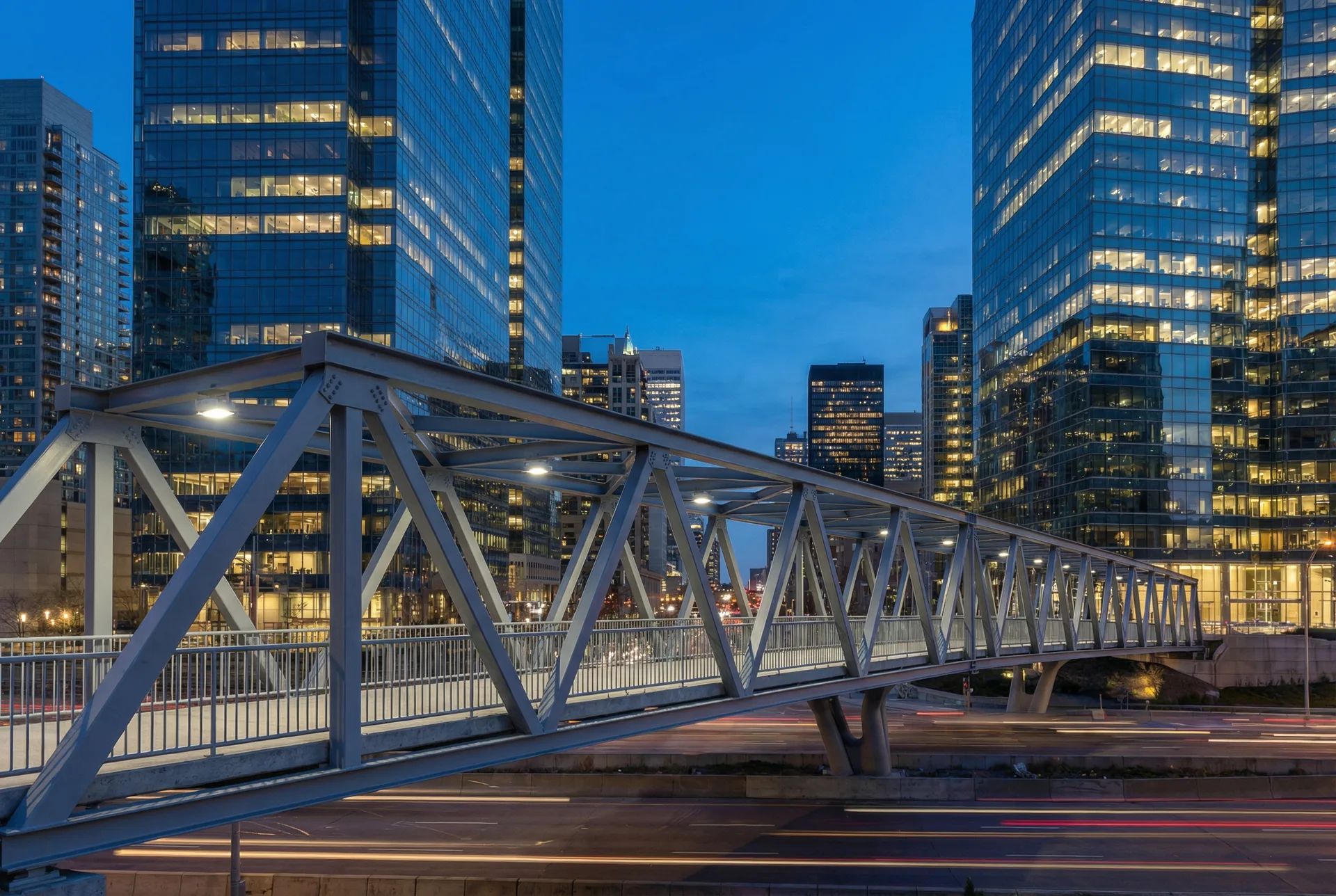
Conventional truss design
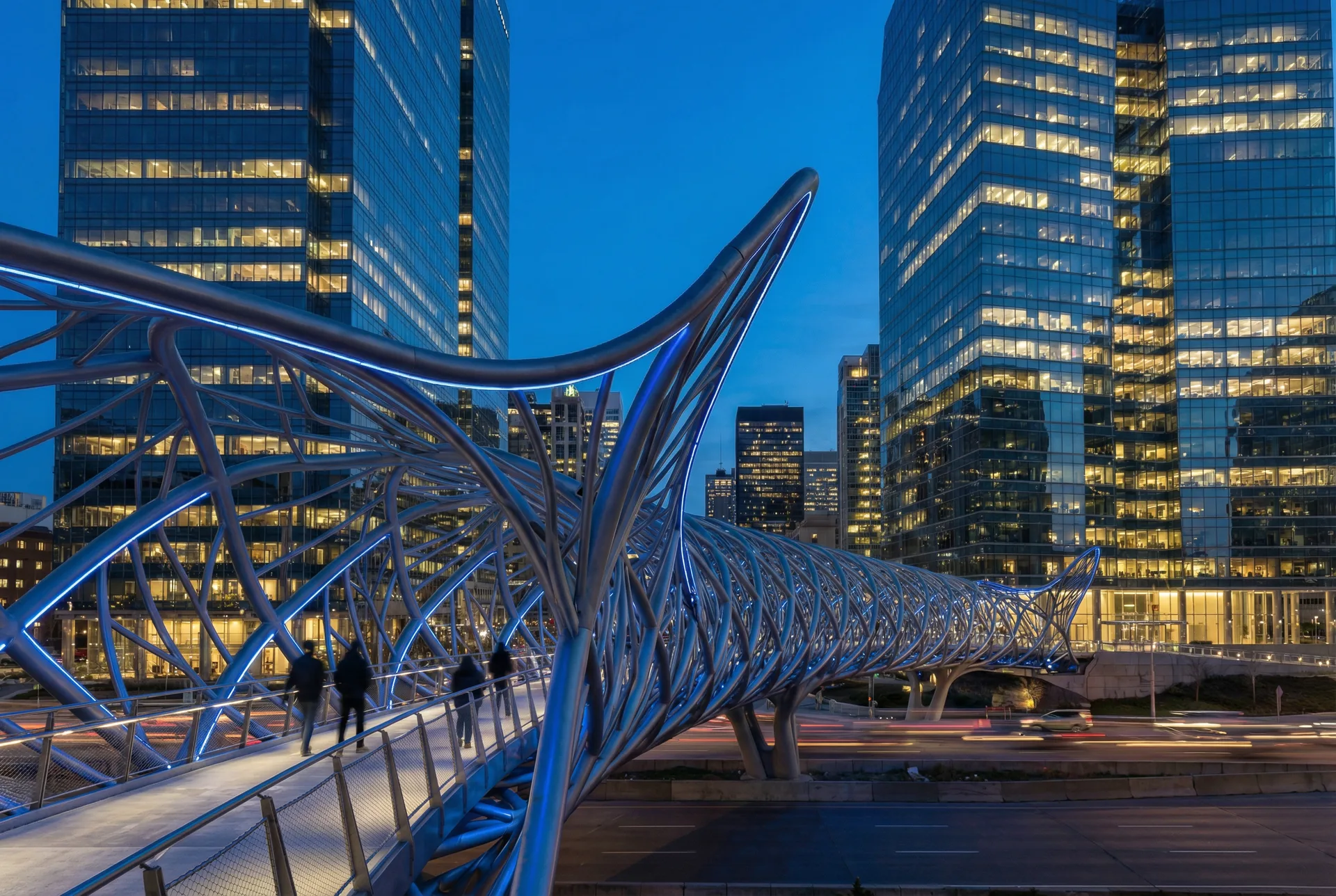
Topology-optimized form
Topology optimization removed 68% of the initial volume, placing material only along force paths. The result uses 50% less steel than a conventional truss while creating a structurally honest, visually distinctive form.
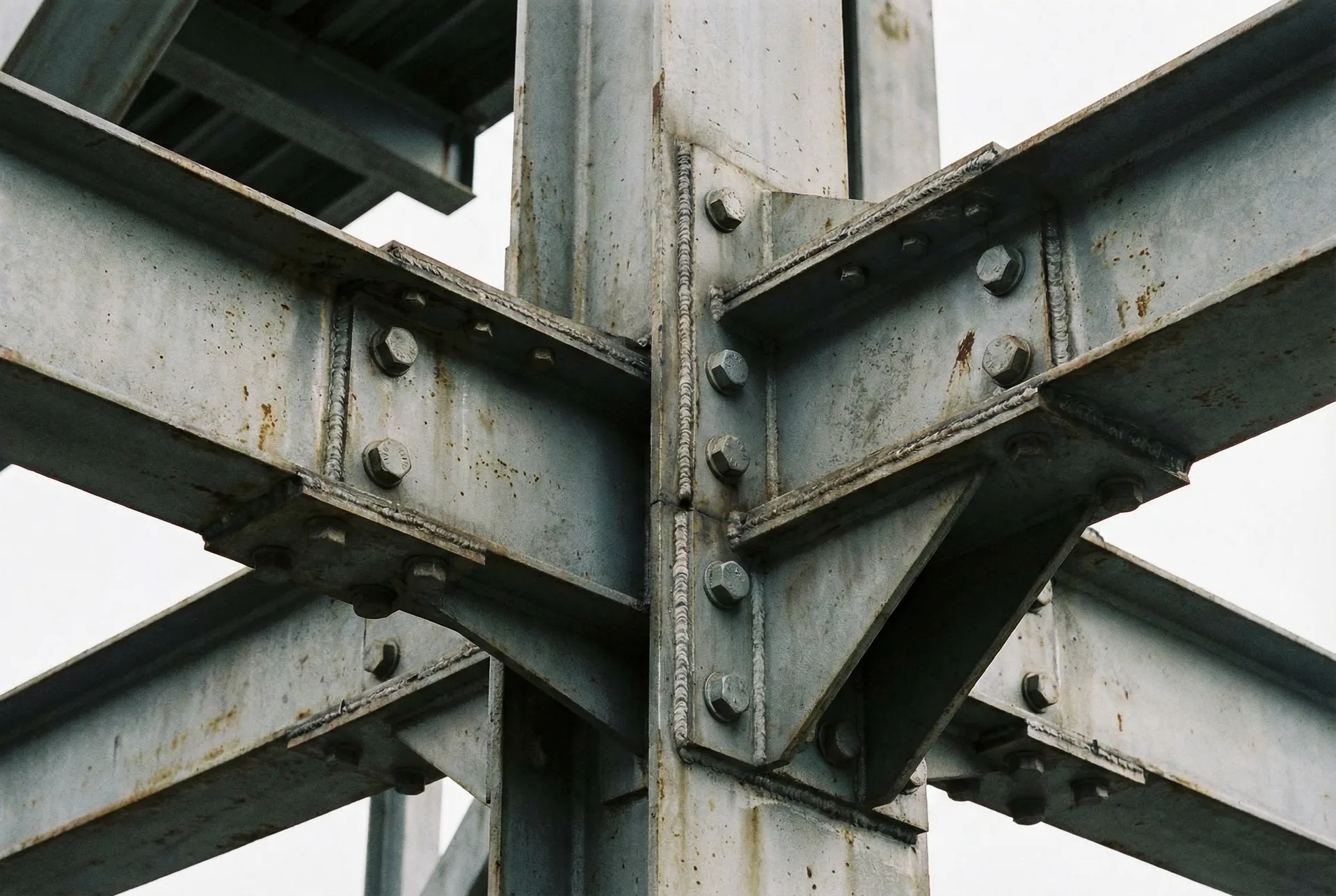
Standard fabrication nodes
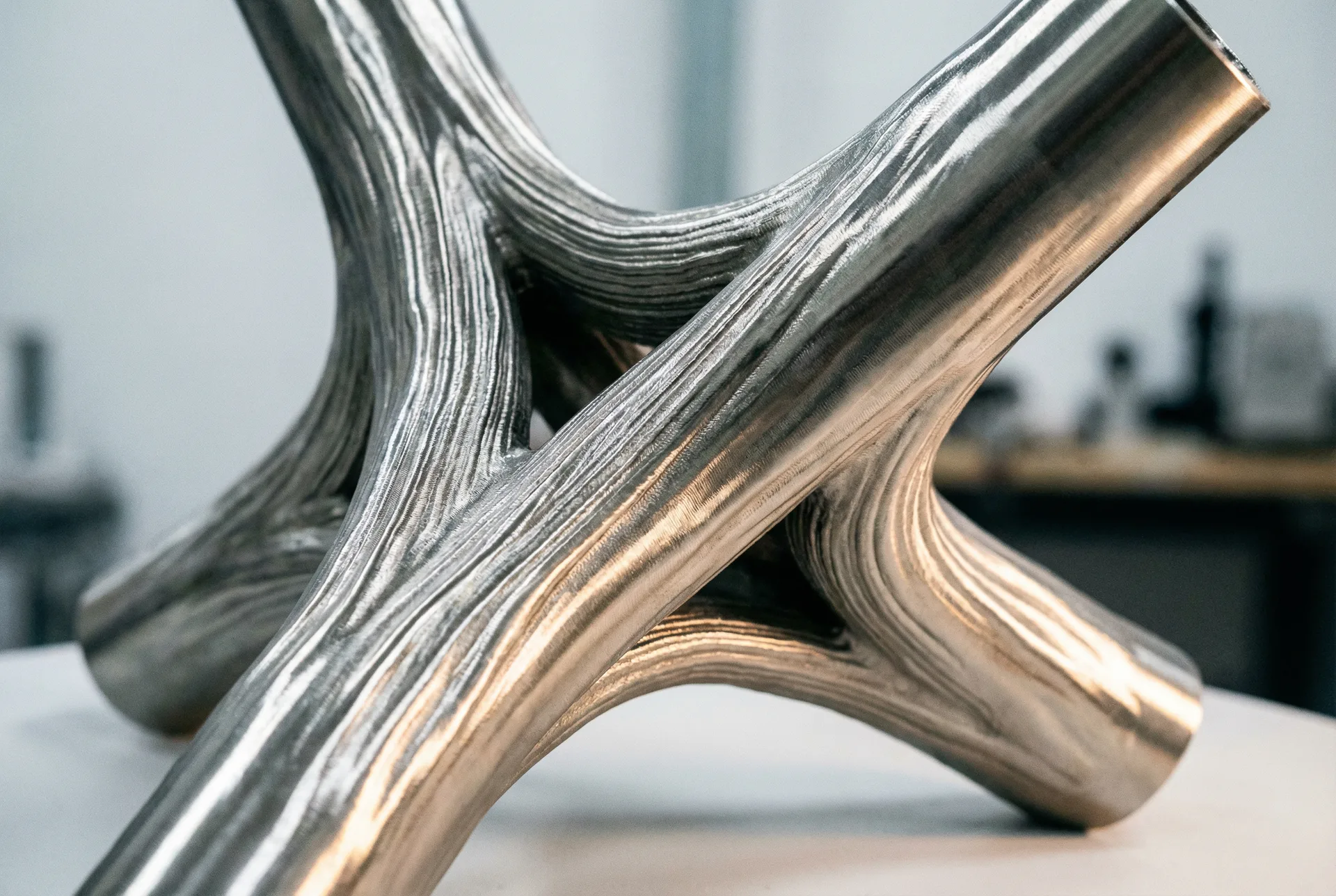
WAAM-printed structural nodes
Wire-Arc Additive Manufacturing replaced conventional welded connections with 48 custom 3D-printed nodes in 316L stainless steel, each tested to 1.8x design load.
Complex geometry requires specialized fabrication. Assembly sequence critical.
We wanted an icon. Fraktal delivered a bridge that is structurally honest and visually unforgettable. The topology-optimized form stopped being engineering and became art.
Click to enlarge
From Research to Product
Izmir, Turkey
Municipality
- Fraktal
- Structural: Format Engineering
Interested in infrastructure design?
We bring algorithmic optimization to projects at every scale. Let’s discuss your next challenge.